Buyers usually ask for the minimum order quantity first, and they usually expect a single number. We quote three, because a cotton crew and a merino hiking sock do not consume the same setup. Understanding why the tiers exist makes it easier to plan a first range instead of guessing at a quantity.
What a minimum actually pays for
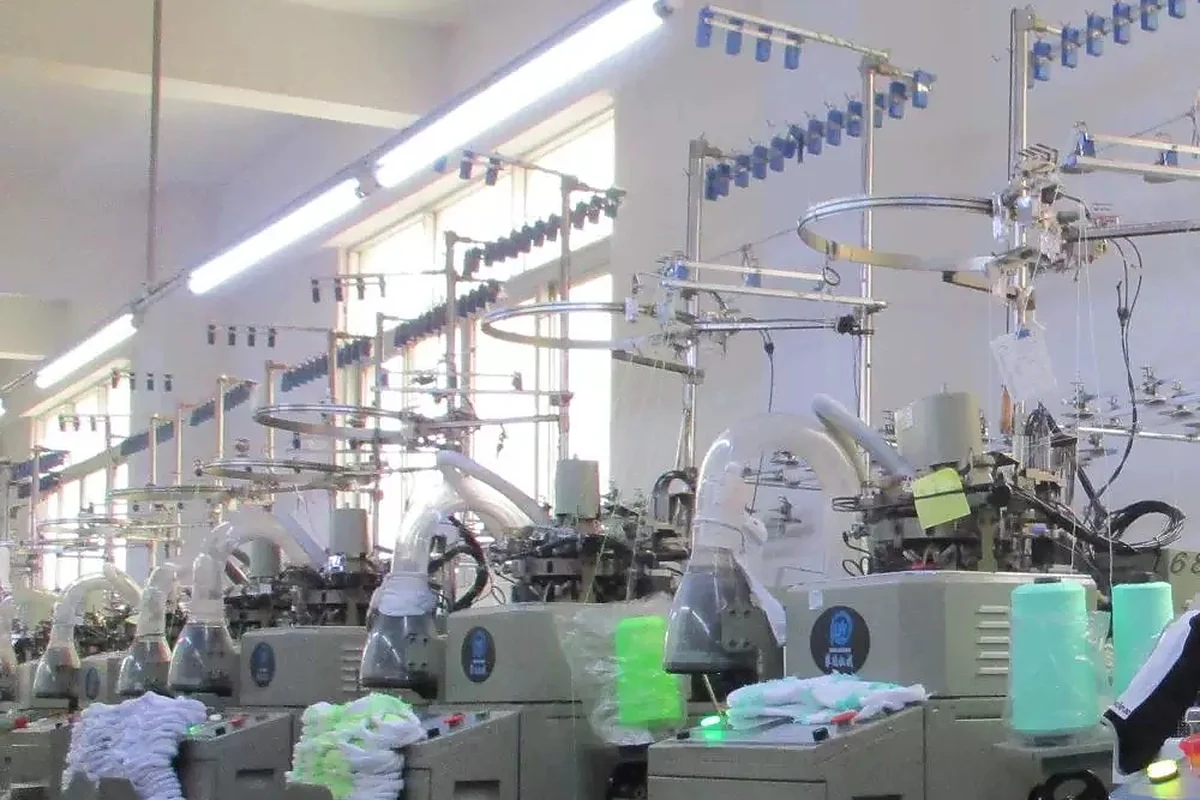
Below a few thousand pairs, a large share of the invoice is fixed cost that does not scale with quantity. The knitting machine has to be set up per design, the yarn lot has to be booked, the label plate has to be made, and the export paperwork is per order rather than per pair.
The minimum is the quantity at which those fixed costs stop distorting the pair price. Above it, adding pairs mostly adds yarn and machine time. Below it, you are paying for setup with very few units to spread it across.
- Machine setup per design, paid once regardless of quantity
- Yarn booking, which has its own minimum from the spinner
- Label and carton plates, a fixed cost per SKU
- Packing labour, which is per order rather than per pair
50 pairs: casual and core crew
A combed cotton crew in a stock colour uses a single yarn, a simple knit and no silicone print, so the setup is short. That is why 50 pairs is viable: the fixed cost per pair is small enough that a test run is not absurd.
This tier suits a merch drop, a coffee brand testing a gift pack, or a brand validating a wordmark before committing to a season. Mixed sizes inside the design do not break the minimum, and up to three colourways can ship inside one 50-pair order.
100 pairs: football, basketball and running
Sport socks add steps: silicone grip zones need a screen and a cure pass, terry cushioning adds machine time, and the size run is wider because clubs order adult and youth together. Each of those steps has its own floor, and 100 pairs is where the total stops being dominated by setup.
A football sock also needs a grip-zone layout approved before knitting, which is a human step rather than a machine one. Doing that once for 100 pairs is efficient. Doing it for 30 pairs is not, which is why we do not offer it at the lower tier.
200 pairs: merino hiking and accessories
Merino is the slowest material in the range. The yarn arrives in fixed lot sizes from the spinner, the blend has to be booked as a batch, and the antibacterial finish is applied per batch rather than per pair. That pushes the entry point to 200 pairs.
Accessories sit at the same tier for a different reason: shin-guard sleeves and headbands are cut and sewn as well as knitted, so the cutting setup needs a minimum number of pieces to be worth running.
Where the tiers are not flexible
Two things do not merge. Different artwork is a different design and a different minimum, even if the sock construction is identical. Different colourways are fine inside one design, up to three, because they share the same knit file and setup.
What does merge is the size run. Fifty pairs split across five sizes costs the same per pair as fifty pairs of one size, and it is the more realistic way to order for a club or a school.
Rule of thumb: order the lowest tier of the style you actually need, not the lowest tier available. A 50-pair crew test tells you nothing about a 100-pair football sock.
What a reorder actually costs
The reason the tiers matter is what happens on the second order. Once a design has run, the machine setup is done, the label plate exists and the artwork is approved, so the fixed cost that dominated the first invoice largely disappears. A reorder at three times the quantity typically lands at a lower price per pair than the test run, even though nothing about the sock has changed.
That is the argument for treating the first order as a tool rather than a product. Fifty pairs answers the fit question, the colour question and the packaging question. It does not answer whether the style sells, which is why the sensible second order is the one where fixed cost per pair drops under roughly a tenth of the pair price.
One practical detail: ask us to reserve the yarn with the first order. Yarn lots are booked per design, and reserving enough for the expected season costs nothing on the invoice while avoiding a shade mismatch on the reorder six months later.
Planning a first range
Most brands we work with start with one style at the lowest viable tier, confirm the fit and the artwork, then reorder at three to five times the quantity with the labels already prepared. That sequence keeps the first spend small without treating the first order as a throwaway.
If you are comparing styles, read the product pages for the tier each one starts at: casual and core crew at 50 pairs, football, basketball and running at 100, merino hiking and accessories at 200. Squad orders are priced separately on the custom team socks page.